
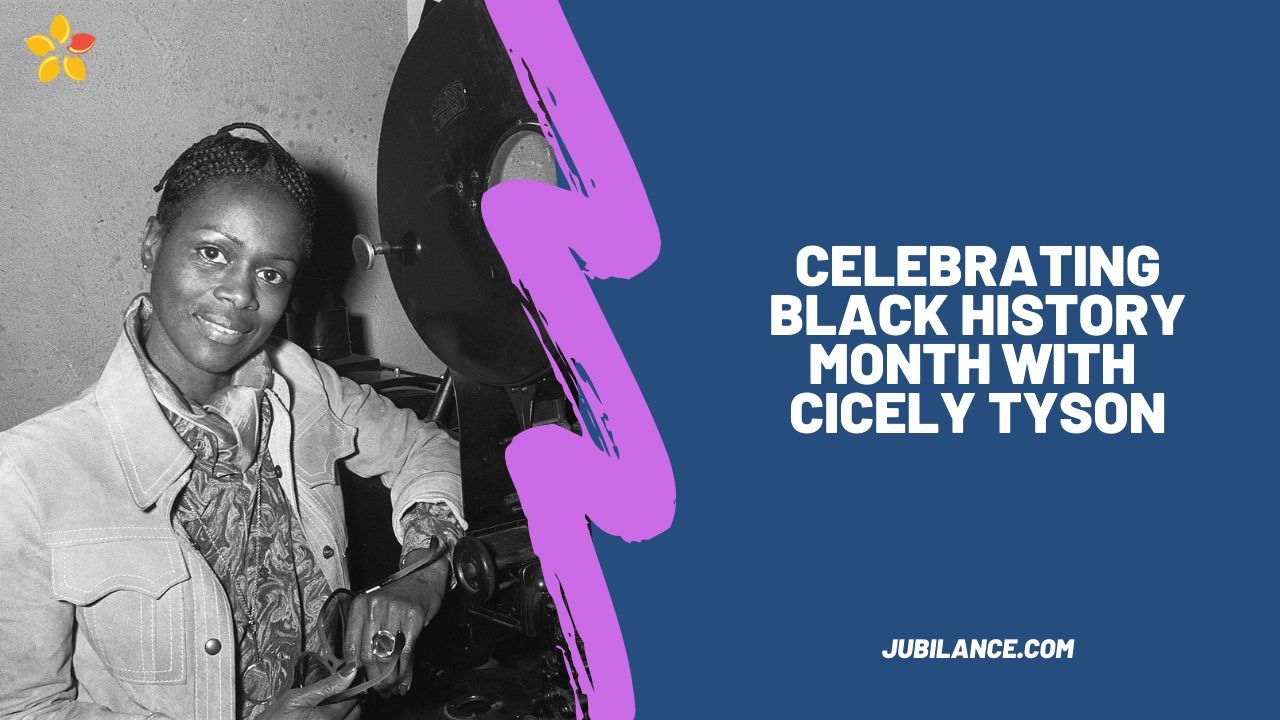
Cicely Tyson was an actress who graced the screen, stage, and television known for her empowering portrayals of Black women, shattering racial stereotypes in the 1970s who then became a figure for civil rights. Her career spanned seven decades and she refused to take parts that demeaned black people and urged her fellow actors to do the same, even if it meant not working.
Listen to our Podcast about her!
She criticized portrayals of Black characters as criminals or servants and she called for Black characters to be portrayed righteously even if they were stricken with poverty.
Over her career, she took on over 100 characters, including some that were traditionally cast with white actors and she was the oldest person to win a Tony Award in 2013 for her take on The Trip to Bountiful by Horton Foote. She then won an honorary Oscar at the age of 93.
Becoming a Star with her First Oscar Nod
In 1972 she became a star with her Oscar Nomination for Best Actress in the film Sounder. She played a wife of a sharecropper who’s sent to prison for stealing food to feed his family. Her character then rose to the challenge and plays her role with grace and dignity. With rave reviews of her performance she told the New York Times , “The story in Sounder is a part of our history, a testimony to the strength of humankind. Our whole Black heritage is that of struggle, pride and dignity. The Black woman has never been shown on the screen this way before.”
“The story in Sounder is a part of our history, a testimony to the strength of humankind. Our whole Black heritage is that of struggle, pride and dignity. The Black woman has never been shown on the screen this way before.”
She went on to win three Emmy awards and became a star of the Black is Beautiful movement, embracing her African heritage wearing a turban and caftan and helped to popularize the Afro.
Cicely’s Biography
Cicely was born in Harlem in 1924 the youngest of three siblings to immigrant parents from Nevis in the Caribbean. She went to High School in Harlem and then started off her career as a model and then moved into acting when she studied at The Actor’s Studio in the 1940’s. She started off with a career in the theatre and starred off-Broadway with James Earl Jones in The Blacks in 1961, which ran for 1,408 performances, the longest running off-Broadway drama of the time. This show helped launch her career and she continued to work in the arts and give to artistic charities, including helping to found the Dance Theatre of Harlem in 1968. She married the Jazz trumpeter and composer Miles Davis in 1981.
She was recognized by her work in the arts and civil rights movement by President Obama who awarded her the Presidential Medal of Freedom in 2016 and continued to work in the arts even during the pandemic, with her memoir, Just As I Am which came out this year.
“We Black actresses have played so many prostitutes and drug addicts and housemaids, always negative. I won’t play that kind of characterless role any more, even if I have to go back to starving.”
She fought for Black Americans to be seen in a different light, to portray themselves in prominent roles. In an interview for Parade magazine in 1972 she said, “We Black actresses have played so many prostitutes and drug addicts and housemaids, always negative. I won’t play that kind of characterless role any more, even if I have to go back to starving.” And she didn’t. She created full people with each character she played, check out her portrayal in Roots, or her take as Coretta Scott King about Martin Luther King in King, or when she played Harriet Tubman in A Woman Called Moses. She wanted Americans to see Black Women in the way she did, fierce and empowered.
Cicely Tyson recently died this January, but she’ll be remembered a woman who fought for her rights, who fought for better representation, and who pushed for characters of dignity.
Here at Jubilance for PMS we are here for representation and opening up the conversation to unheard stories. Jubilance for PMS is the only oaa supplement (oxaloacetate) that helps to relieve your anxiety, stress, irritability, and gloominess.